Days
9 Days
Arrival City
Kathmandu
Departure City
Kathmandu
Best Season
April to October
Max Altitude
0m
Accommodation
Deluxe Accommodation in 3 star hotel in twin/triple sharing basis
Transportation
Private Tour Vehicle/Flight
Difficulty
Moderate
Group Size
2 - 16
Bhutan, Land of the Thunder Dragon. Is there another country on the planet with a cooler catch phrase? Bhutan sounds exotic, mystical, and almost otherworldly. Well, it feels that way too. Bhutan is such a joy to travel to, this tiny country straddling the Himalayas. If you want to see Bhutan before it gets to be modernized, go now. It is a feast for the eyes and an eye opening cultural experience. Explore the Dzong, marvel at the Himalayas, eat chilies and cheese, learn about Buddhism, and have one of the most unique travel experiences of your life.
These package are also called the Minimum Daily Package, this is the daily fee, per person, to visit Bhutan. This tariff covers your stay in a 3 star accommodation (4 and 5 star accommodations require an additional fee), all meals, a licensed Bhutanese tour guide, all internal transportation, and camping equipment if you are going trekking. This fee also includes taxes and the Royalty fee of $65.
Your payment needs to be wired to the Bhutan National Bank before your visa will be issued. This fee is mandatory. There is no negotiating down the price of the tourist tariff
TOP THINGS TO SEE IN BHUTAN:
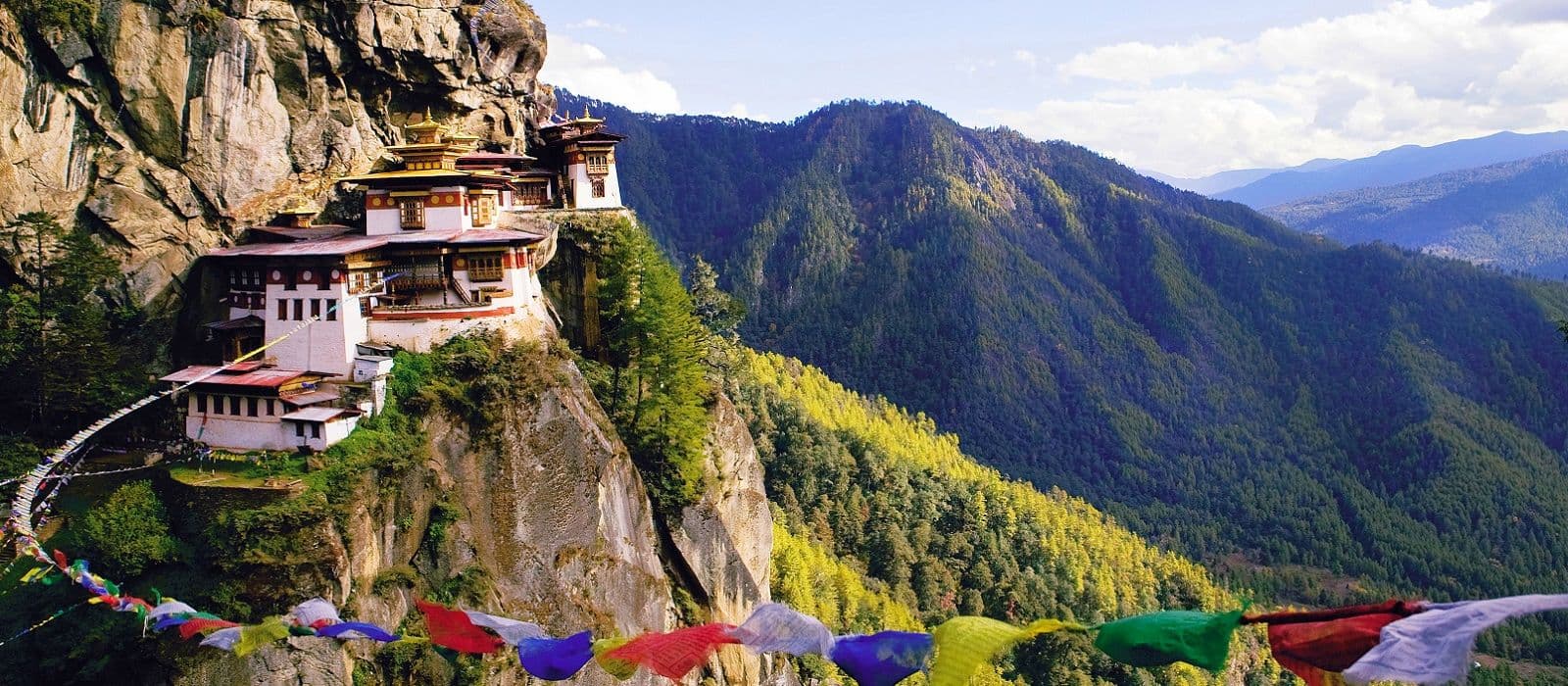
Tiger’s Nest (Paro Takstang): Gaze at this Buddhist monastery precariously perched on the side of a mountain hundreds of meters off of the ground. It’s worth the uphill hike to get here and this is your chance to see one of Bhutan’s most popular icons.
Paro: Most people spend at least a little time in this city since it is home to Paro International Airport. This is also your home base for the hike up to the Tiger’s Nest.
Thimphu: Thimphu is the capital of Bhutan. There is a lot to do here. Visit the Cheri Monastery, see the Takin Preserve, spin prayer wheels at the Memorial Chorten, or gaze up at Buddha Dordenma, the largest sitting Buddha in the world.
Dochula Pass: The Dochula Pass is a high mountain pass (3,080 meters, 10,330 ft) on the road between Thimpu and Punakha. Get a glimpse of snow-covered Himalayas and walk among the 108 chortens that serve as a memorial to Bhutanese soldiers killed in a uprising in 2003.
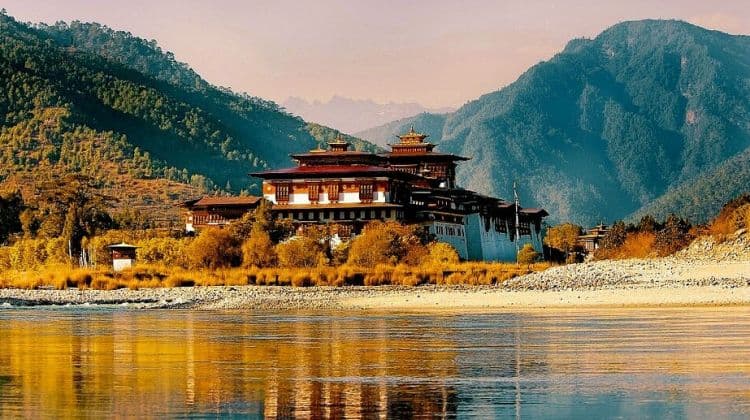
Punakha: This city was once the capital of Bhutan. Visitors come here to see the amazing Punakha Dzong sitting on the banks of the Pho Chhu and Mo Chhu Rivers.
Chimi Lhakhang: This is a Buddhist monastery located near Punakha. Lama Drukpa Kunley, the Divine Madman, is one of Bhutan’s favorite saints, famous for his sexual exploits. His temple is now visited by childless couples searching to increase their fertility. Be blessed by a wooden phallus to ward off evil spirits…a travel experience you won’t soon forget.
Snowman Trek: This is one of the hardest high-altitude treks in the world. Spend 25 days trekking through the Himalayas of Bhutan, crossing nine passes with altitudes over 4500 meters.
See a festival: Bhutan is a country that loves a festival. These are among the most colorful events in the world.
📍 Route: Kathmandu ➔ Paro (Thimpu) ➔ Dachula Pass ➔Punakha ➔ Gangtey Valley ➔ Bhumthang ➔ Kathmandu
Arrive at Paro Airport and then drive to the capital city Thimphu. Altitude: 2320m/ 7656ft above sea level. (1 hour 30 minutes drive) The flight into the Himalayas reveals scenic and breathtaking views of Himalayan Mountains of the world. If weather permits you will be able to see Mt Everest (8848m, 29,198ft) and other Himalayan mountain ranges. After checking into the hotel later visit,Your representative from the agency will greet you on arrival and drive you to the capital city, Thimphu.On the way to Thimphu visit, TamchhogLhakhang which is located on the opposite side of the river. This is a temple built by Thang Thong Gyalpo of Tibet, who was responsible for building numerous iron bridges throughout Bhutan.Kuenselcholing View Point: A place from where you can get a good overview of the Thimphu valley is from the Buddha point (KuenselPhodrang). It is again a short drive from the town. You can pay your obeisance and offer prayers to the Buddha, the largest statue in the country and then walk around and take a glimpse of the valley.MemorialChorten: This particular chorten was constructed in 1974 as a memorial for the third King of the country, King JigmeDorjiWangchuck, who is widely regarded as the father of modern Bhutan.TashichhoDzong :The names means – Means Fortress of Glorious Religion. It was built in 1641 by ZhabdrungNgawangNamgyel. It houses the secretariat building, the throne room and the office of the king, and the central monk body.Later relax for the day and stroll around the city.Overnight in Thimphu
Morning take a hike to Cheri Monastery (Includes Dodina and JigmeDorji Wild life Sanctuary): Hike about 1hrs (to and fro) leds to Cheri Goemba (Cheri DorjiDhen). ZhabdrungNgawangNamgyal built this monastery in 1620 and established the first monk body here. A chance to spot birds such as Mrs Gould’s Sunbird, Yellow-browed Tit, Yellow-rumpedHoneyguide, Long-billed Thrush, Ultramarine Flycatcher.Paper factory: The handmade paper making in Bhutan stemmed from the age old tradition originated in 8th century of Bhutanese history. The handmade paper constitutes as valuable National heritage of Bhutanese cultural identity and is preserved through all the ages. The Traditional paper is recognized and held high esteem both in home and outside world. The weekend market: Held every Friday, Saturday and Sunday, the people crowd the stalls every day, dressed in full colour and gathered to meet and to barter, much like the street markets in London!Bhutan Craft bazaar: The private stalls had a variety of high-end quality products from places across the country such as wood carved national symbols, bags and western wears with touch of traditional designs, wooden and clay utensils, Bangchung, Dhapa, key hanger of jewelry boxes, bookmarks and handmade packing papers (Deysho) in different patterns, antique items and etc. The stalls have a distinctly rich outlook with fine tones of elegance, and a warm and inviting atmosphere. The craft bazaar is also an exemplary of how bamboo can be used to construct houses in the country.Later you can stroll around the city.Overnight in Thimphu.
Morning driving towards Gangtey, we come across a pass known as Dochula (3140m, 10362ft) from where a beautiful panoramic view of the Himalayan mountain range can be seen, especially in clear winter days. The beauty of this place is further enhanced by the DrukWangyalChortens- a 108 stupas built by the eldest Queen, Her Majesty AshiDorjiWangmoWangchuck.In the mountains east of WangduePhodrang lies the beautiful Phobjikha valley, on the slopes of which is situated the great monastery of Gangtey, established in the 17th century. The village of Phobjikha lies a few km. down from the monastery, on the valley floor. This quiet, remote valley is the winter home of black necked cranes, which migrate from the arid plains of Tibet in the north, to pass the winter months in a milder climate. Overnight in Gangtey.
Morning you will hike across Gangtey Nature Trail: (Duration: Half day: two hours at a quicker pace): This is one of the most beautiful and shortest of the existing nature trail. In this trail you have the opportunity to visit the magnificent Goemba(Monastery), it also leads to sloping area of green grass, flanked by pine trees on either side. You will even come across some villages, rivers, crane roosting ground.Trongsa Museum: Situated strategically above the Trongsadzong, the Ta Dzong served as the watch tower for centuries. It was built by ChoejeMinjurTempa in 1652.The museum is equipped with state of the art technology and includes a media room where visitors can watch a documentary programme on the history of the monarchy.The Ta Dzong was renovated and converted as a museum at a cost of Nu. 97 millions with funds from the Austrian government. The museum is dedicated to the coronation and centenary celebrations. Overnight in Trongsa.
After breakfast drive to Bumthang (68 KM) and visit JambayLhakhang, KurjeyLhakhang&Tamzhing Monastery. Overnight in Bumthang
Morning drive to Punakha visit PunakhaDzong (fortress): Built in 1637 by Zhabdrung which is remarkably located between the rivers of Mo (Female) Chu (river) and Pho (Male) Chu. Until the time of second king it served as a seat of the king.Hike toChimiLhakhang(Temple of fertility): This Temple was built by lam DrukpaKuenley (The Divine Madman) in 1499. It is about thirty minutes hike across fields from the road –Wooden phalluses are often found hanging in the four corners of the houses and also phalluses are painted on the walls of houses. It is the common belief that this helps in driving away evil spirits.(30 minutes hike to and fro, gentle steep, good footh path across the valleys and villages).Overnight in Punakha/Wangdue
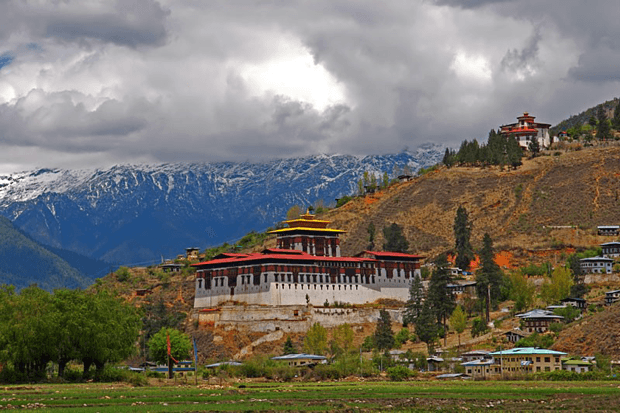
Morning drive to Paro and visit, RimpungDzong: The Bhutanese Dzongs are huge architectural structures constructed for a variety of functions throughout the country, from administrative buildings to monasteries and temples, yet they are carefully and thoughtfully designed and are strikingly beautiful. The RimpungDzong, known as the “fortress of the heap of jewels” in the picturesque setting of the Paro valley, is of course no exception, built in the time of the dynamic spiritual and political leader Zhabdrung in 1644. Once a year, as part of the Tsechu festival, one of the oldest Thongdol (gigantic scroll paintings) is ceremonially unfurled here. KichuLhakhang(Monastery): It is one of the two most sacred and the oldest temples in Bhutan. It was built in 7th century by Tibetan King SongtsenGampo.Drugyeldzong: This ruined dzong is of historical importance. It was built in 1649 by Zhabdrung to commemorate the victory of the Drukpas over the Tibetan invasion in 1644. The Bhutanese still vividly recall and celebrate this victory which was tremendously important to the history of the area. On a clear day (7326m/ 24176ft), you have a fascinating view of the white domed peak of sacred Jhomolhari (Mountain of Goddess).Overnight in Paro.
Morning hike to Taktshang Monastery (Tiger’s nest): This is Bhutan’s most recognizable cultural icon perched 800m/2640ft up a seemingly sheer cliff. Although it was tragically and mysteriously consumed by fire in April 1998 it has now been restored to its former glory. It is believed that in the 8th century, the great tantric master Guru Rimopche/ Padmasambhava (2nd Buddha) flew on the back of a tigress to the site where the monastery now stands. (Five hours hike to and fro, some gentle and some steep hike, some stony foot path and some good ones) If you ride a horse upward it will cost extra US$25 per person. Visit Farmhouse: Picturesque farm houses dot the valley amongst fields and hillsides. We welcome you to enjoy the hospitality of the Paro farmers. Thrill yourself as the farmers welcome you to their homes with genuine smiles. The two to three-storied Bhutanese farm houses are handsome in appearance, with colorfully decorated outer walls and lintels, and are traditionally built. A visit to a farm house gives an interesting glimpse into the lifestyle of a farming family. (If you take hot stone bath in the farm house it will cost extra US$25 per person.)Later stroll around the town and see how locals live. Overnight in Paro.
Early breakfast at the hotel and then drive to the airport. Your escort will assist you with exit formalities and bid you farewell.
This trip runs on a customizable, on-request basis — choose your own start date and we'll build the group and logistics around it.
📍 Route: Kathmandu ➔ Paro (Thimpu) ➔ Dachula Pass ➔Punakha ➔ Gangtey Valley ➔ Bhumthang ➔ Kathmandu
Every itinerary can be adjusted for extra acclimatization days, private departures, or combining with another region. Mention it in your enquiry and we'll rework the day-by-day plan accordingly.
Replies within 24 hours · No spam, ever