Everything You Need to Know Before You Go
Bhutan, Land of the Thunder Dragon. Is there another country on the planet with a cooler catch phrase? Bhutan sounds exotic, mystical, and almost otherworldly. Well, it feels that way too. Bhutan is such a joy to travel to, this tiny country straddling the Himalayas. If you want to see Bhutan before it gets to be modernized, go now. It is a feast for the eyes and an eye opening cultural experience. Explore the dzongs, marvel at the Himalayas, eat chilies and cheese, learn about Buddhism, and have one of the most unique travel experiences of your life. It is a small Himalayan kingdom that controls tourism deliberately — every visitor must book through a licensed operator and pay a sustainable development levy. It is one of the world’s safest travel destinations, carbon-negative, and constitutionally required to keep 60% of its land forested. This guide covers visas, best time to visit, where to go, safety, festivals, and what to expect when travelling in Bhutan — with links to deeper guides for each topic. Tucked between India and China, the Kingdom of Bhutan is one of the world's most carefully protected destinations. It opened to international tourism in 1974 and has guarded its rich culture, ancient monasteries, and natural environment with quiet determination ever since. This Bhutan travel guide is designed as your starting point — an overview of everything that matters before you go, with dedicated guides covering each area in full depth, from how to plan your time on the ground to the festivals, hikes, and valleys worth building a trip around.
The Bhutan Experience: What Makes This Kingdom Stand Apart
Bhutan is unlike anywhere else on the planet. Its mountainous terrain, deeply spiritual traditions, and deliberate approach to development make it a destination that stays with you long after you return home. It is not a place to rush through. It rewards travellers who come with curiosity and patience.
Gross National Happiness — a Country Measured by Wellbeing
Most countries measure progress by GDP. Bhutan measures it by Gross National Happiness — a framework that balances economic development with cultural preservation, environmental sustainability, and good governance. The wellbeing of Bhutanese people and of future generations sits at the heart of every policy decision. This philosophy shapes the entire country. Bhutan is one of the few carbon-negative countries in the world, meaning it absorbs more carbon dioxide than it produces. Its natural environment is protected by a constitutional requirement that at least 60 per cent of the land remains under forest cover. The result is a landscape of extraordinary beauty — one that has been kept that way on purpose.
A Kingdom That Controls Its Tourism for a Reason
Bhutan has never chased mass tourism. Since opening to the outside world in 1974, it has applied a sustainable tourism levy that limits visitor numbers and funds conservation, infrastructure, and community development. This is not a barrier to entry — it is a commitment to preserving everything that makes Bhutan worth visiting. Every visitor must book through a licensed operator and travel with an experienced tour guide. This ensures that travellers discover Bhutan thoughtfully, with proper context and support throughout their trip.
Planning a Trip to Bhutan Everything You Need to Know Before You Go
All international visitors require a Bhutanese visa, which is arranged through your licensed tour operator before you travel. You cannot obtain a visa on arrival or apply independently. Your operator handles the process and issues a visa clearance letter, which you exchange for your visa stamp on arrival at Paro Airport. For full official entry requirements, the Tourism Council of Bhutan publishes up-to-date guidance for all visiting nationalities. Insurance documentation may be required as part of your entry paperwork. Check with your operator well in advance so that all requirements are in order before your departure date.
Travel Insurance
Taking out comprehensive travel insurance before you travel to Bhutan is essential. Your policy should cover medical treatment, emergency evacuation, trip cancellation, and any activities you plan to take part in — including trekking at altitude. Bhutan's healthcare infrastructure is limited outside the capital, and emergency evacuation from remote areas can be costly. A good travel insurance policy protects you from unexpected expenses and gives you peace of mind throughout your trip.
When to Visit Bhutan
Spring (March to May) and autumn (September to November) are the most popular times to visit. Spring brings rhododendrons in bloom across the hillsides, while autumn offers clear skies, sharp mountain views, and some of Bhutan's most spectacular festivals. Winter is cold at altitude but quieter, with good visibility and fewer visitors. The monsoon season (June to August) brings heavy rainfall and lush greenery, though some roads and mountain trails may become difficult. Each season has its own trade-offs - the month-by-month breakdown covers conditions, festivals, and crowd levels in full. How to Get to Bhutan The only international airport in Bhutan is Paro, served by Druk Air and Bhutan Airlines. Both carriers operate connections from several regional hubs, including Kathmandu in Nepal, Delhi and Kolkata in India, Bangkok in Thailand, and Singapore.
The approach into Paro is considered one of the most dramatic in aviation — pilots navigate between steep mountain ridges to reach the valley floor. Travellers connecting via Kathmandu, Bangkok, or Assam in northeast India will find the routing straightforward depending on where they are flying from.
How Long to Spend in Bhutan
Most visitors spend between eight and fourteen days in Bhutan. A week is the minimum to do the country justice, allowing time in Paro, Thimphu, and Punakha. Two weeks opens up the central valleys of Bumthang and the glacial scenery of Phobjikha. If your schedule allows, timing your trip around a festival adds a dimension that is hard to match anywhere else.
Is Bhutan Safe to Visit?
Bhutan is one of the safest travel destinations in Asia. Crime rates are extremely low, and visitors consistently report feeling welcome and secure throughout their time in the country.
Crime and Personal Safety
Violent crime is rare. Petty theft exists but is uncommon compared with many other destinations. The Bhutanese people are known for their warmth and hospitality, and travellers are treated as welcome guests. Standard travel precautions apply, but Bhutan does not present the safety concerns associated with higher-risk destinations. Natural Hazards and Road Conditions The main safety consideration in Bhutan is the terrain. Mountain roads are narrow, winding, and sometimes unpaved. Landslides during the monsoon season can disrupt routes, and some high-altitude passes are subject to snow in winter. Travelling with an experienced local tour guide means these risks are managed for you. Your guide will know current road conditions, alternative routes, and how to adjust your itinerary when conditions change.
Altitude Considerations
Parts of Bhutan sit at significant altitude. Thimphu, the capital, is at around 2,300 metres. Some valleys and passes are considerably higher. If you are travelling from sea level or planning any trekking, allow time to acclimatise and stay well hydrated. The NHS guidance on altitude sickness is worth reading before you travel if this is a concern. Speak to your doctor before travelling if you have any concerns about altitude.
Travelling in Bhutan Getting Around
All travel within Bhutan is arranged through your licensed tour operator. Private vehicles and a dedicated tour guide are provided throughout your trip, so logistics are handled from start to finish. This is one of the aspects of travelling in Bhutan that visitors find most reassuring — you are in good hands from the moment you land.
What to Expect from Accommodation
Accommodation in Bhutan ranges from comfortable guesthouses and mid-range hotels to upscale boutique properties in the main valleys. Most visitors stay in well-run properties that reflect local character without compromising on comfort. Standards vary by region, with Thimphu and Paro offering the widest choice.
Bhutanese Food, Drink, and Practical Tips
Bhutanese food is hearty, warming, and built around chilli and cheese in a way that surprises most first-time visitors. Ema datshi — a stew of chillies and local cheese — is the national dish, eaten at almost every meal. Red rice, buckwheat, and dried meat also feature heavily, particularly in the colder months. Butter tea (suja) is the traditional drink. It is strong, salty, and served hot — an acquired taste for many visitors. Ara, a local spirit distilled from grain, is offered at celebrations and festivals. Drinking water from the tap is not recommended. Carry a reusable bottle and refill it from filtered sources provided by your accommodation.
Where to Go in Bhutan
The sections below introduce each key region. This hub page keeps descriptions at overview level — if you want the full picture of what to see and do across the country, the complete Bhutan attractions guide goes valley by valley in much greater depth. Paro Valley — Gateway to One of the World's Most Sacred Sites Paro is where you arrive, and it deserves more than a passing visit. The valley is home to Taktsang Palphug - better known as Tiger's Nest Monastery - clinging to a sheer cliff face at around 3,120 metres. The hike takes between two and four hours and is one of the most rewarding walks in the country. Trail conditions, difficulty levels, and what to expect on the day are all covered in the Tiger's Nest hiking guide. The valley also holds some of Bhutan's finest ancient monasteries and best-preserved dzong architecture, making it a place worth taking slowly.
Thimphu — a Capital with Enduring Charm
Thimphu is Bhutan's capital and its only city, yet it retains a small-town feel that sets it apart from most national capitals. Thimphu Dzong — formally the Tashichho Dzong — sits at the northern end of the city and serves as both a working monastery and the seat of government. It is one of the most photographed buildings in Bhutan. On the hillside to the south, Buddha Point gives one of the best views across the valley. The enormous Buddha Dordenma statue looks out over the city and surrounding mountains. It is a peaceful spot and well worth the short drive. Thimphu also has a modest but growing café and restaurant scene, several good museums, and a weekend market where local traders sell produce, textiles, and crafts.
Punakha — the Fertile Valley and the Palace of Great Happiness
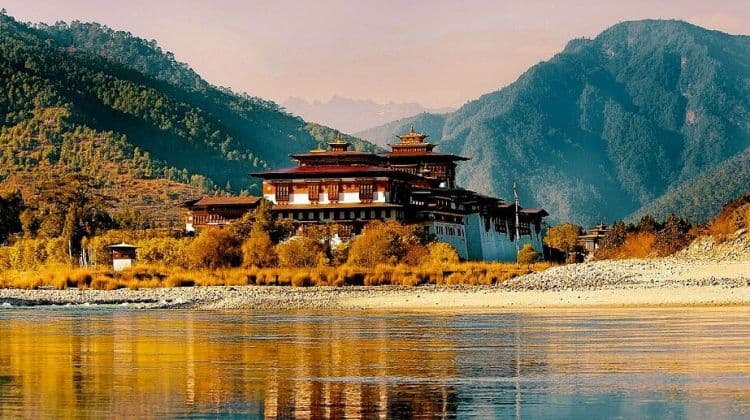
The drive from Thimphu to Punakha crosses the Dochula Pass at over 3,000 metres, with views of the eastern Himalayan range on a clear day. Punakha itself sits at a lower, warmer altitude, making it one of the most pleasant valleys in Bhutan. Punakha Dzong — the Palace of Great Happiness — stands at the confluence of two rivers and is considered the most beautiful dzong in the country. It was the seat of government until Thimphu took over that role in the 1950s.
Bumthang — the Spiritual Heartland of Bhutan
Bumthang is a cluster of four valleys in central Bhutan and is widely regarded as the country's spiritual heartland. Its temples and monasteries predate the formal arrival of Buddhism in Bhutan by several centuries, and the region holds a special place in Bhutanese religious history. The Ngang Lhakhang temple in Tang Valley hosts the Nalakhar Festival — a three-day celebration of masked dances and religious ceremony. Shechen Nunnery, also in the Bumthang area, is an active religious institution and one of the most atmospheric places to visit in the region.
Phobjikha Valley — Glacial Scenery and the Black-Necked Cranes
Phobjikha is a broad, glacial valley in western Bhutan and one of the most scenic areas in the country. In November, it becomes home to flocks of black-necked cranes that migrate from the Tibetan plateau to overwinter on the valley floor. The IUCN Red List classifies the black-necked crane as vulnerable, which makes Phobjikha's wintering population particularly significant. The Black-Necked Crane Festival at Gangtey celebrates their arrival each year with traditional dances and school performances. The valley is also a working agricultural landscape and one of the best places to see rural Bhutanese life up close. Bhutanese Festivals — When the Kingdom Comes Alive Timing your visit to coincide with a Bhutanese festival transforms the experience entirely. These are not performances for tourists — they are living religious events that Bhutanese communities have celebrated for centuries.
What Happens at a Bhutanese Festival
Festivals in Bhutan typically take place over two or three days in the courtyard of a dzong or monastery. Monks and laypeople perform cham — masked dances that re-enact Buddhist teachings — while the surrounding galleries fill with locals dressed in traditional kira and gho. Attending a festival offers an unparalleled insight into Bhutanese culture and the continuing role of Buddhism in everyday life.
Key Festivals to Plan Around
The Paro Tsechu and the Thimphu Tsechu are the two largest and most well-known festivals, drawing visitors from across Bhutan and abroad. The Nalakhar Festival in Bumthang and the Black-Necked Crane Festival in Phobjikha offer more intimate experiences in regions that see fewer visitors. Our small-group festival itinerary is built around these dates, putting you in the right valley at the right time. Dates vary each year according to the lunar calendar, so check in advance and plan your itinerary accordingly.
Bhutanese Culture and Customs
Bhutan has a strong and living culture. Traditional dress — the gho for men and the kira for women — is worn daily by much of the population and is required when entering dzongs and government buildings. As a visitor, you will not be expected to wear traditional dress, but modest clothing is appropriate at religious sites. Photography is welcomed in most places, though you should ask before photographing people and always follow guidance from your tour guide at religious sites. Shoes must be removed before entering temples and monasteries. The Bhutanese people are courteous and reserved by nature. A warm greeting and a respectful approach goes a long way. Loud behaviour or visible impatience is out of place in a country that prizes dignity and composure.
Conclusion Bhutan is a destination that asks something of you in return for its beauty. It asks for your attention, your respect, and your willingness to slow down. In exchange, it offers landscapes, festivals, and cultural experiences that few places on earth can match. Undiscovered Destinations has been taking small groups to Bhutan for years, with itineraries that bring the country's valleys, festivals, and people to life without rushing the experience. Begin your Bhutan journey with people who know it well — start planning and see where the kingdom takes you.
Written by Himanshu Travels
Himanshu Tours & Travels team