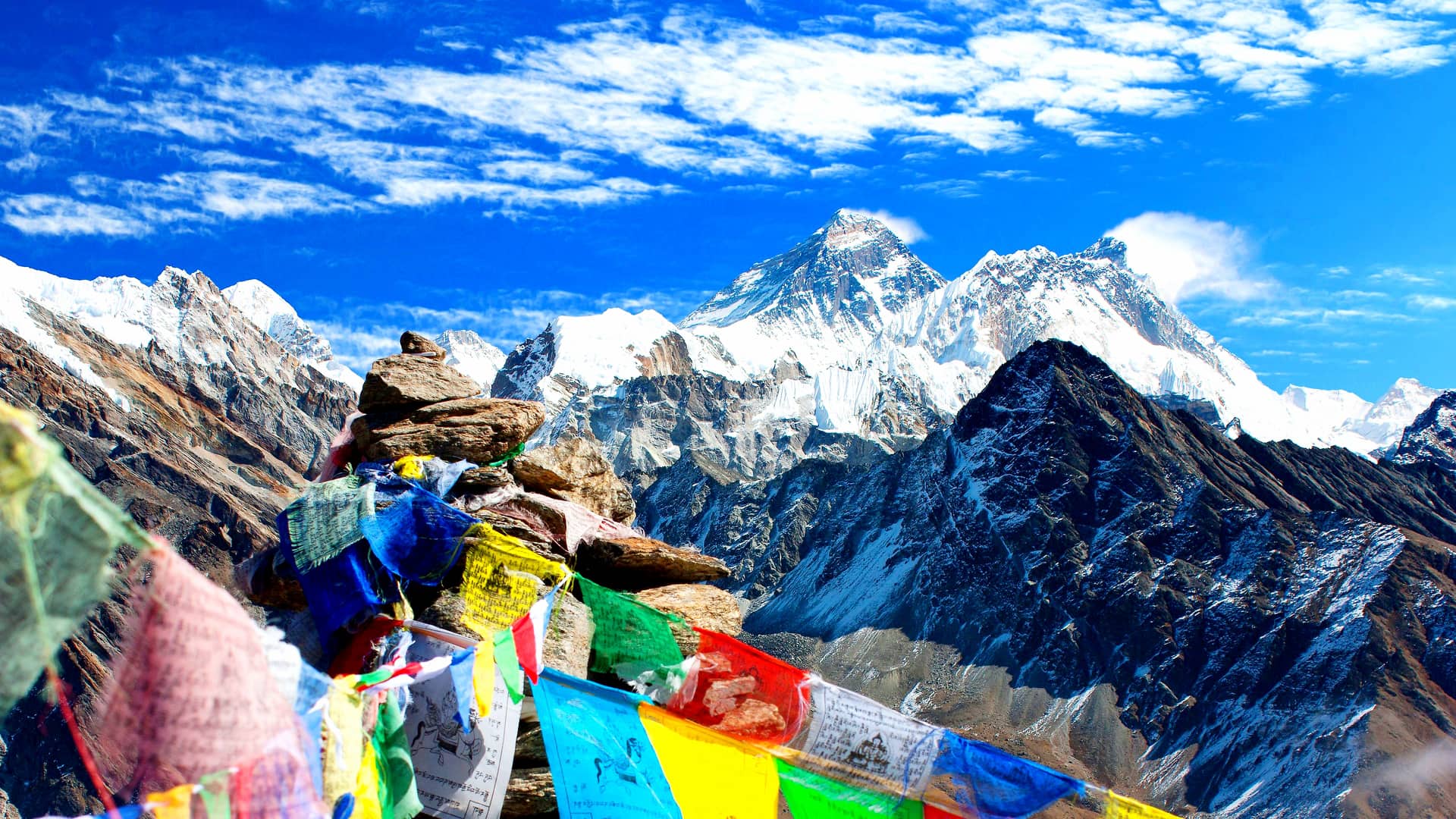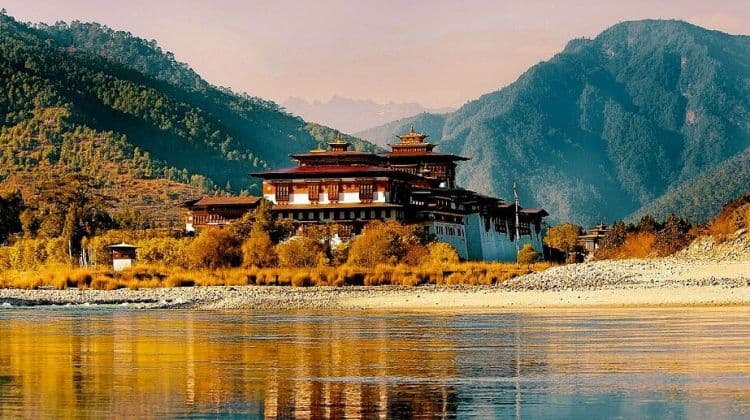
TIBET is one of the world's most extraordinary destinations and there is adventure indeed lurking around almost each and every corner. Lhasa The capital lies high in the arid wilderness of the Tibetan mountains; its name the "Roof of the World" is no idle statement. The valley bottoms of Tibet are higher than the highest mountains elsewhere. Its snow covered plateaus are the highest in the world and apart from the Everest, which Tibetans see from 'the other side', many mountains are over 15000 feet
General Travel Information
Facts for the traveler: To visit Tibet, the legendary, forbidden land on the roof of the world, has been the dream of many Westerners.
Getting there:
By air:
Kathmandu - gonggar : a twice-weekly flight operates between Kathmandu and Lhasa from the beginning of April through October and sometimes till November depending upon the weather conditions. The 55 minute flight offers spectacular views of the Himalayas and the southern Tibetan plateau.
By road:
An approach that has great appeal for hardy and adventurous travellers is to enter or leave Tibet by road, following the footsteps of explorers who for more than a century tried (and usually failed) to reach Lhasa overland.
Visa:
The Chinese governments prohibits individual traveler to visit Tibet. The Chinese embassy will only issue visas to travelers on group tours i.e if there is a single tourist or a tourist group of less then 05 pax then they will have to join a group in order to get a visa. In addition to the visa, it is necessary to obtain an aliens' travel permit for travel in Tibet. Please carry 04 passport size photographs + smaller us dollars denominations for faster completions of visa formalities.
Customs regulations:
Art objects and antiques in Tibet fall under special restrictions forbidding their export. Anything made before 1959 is considered an antique. Rugs may be bought and exported, so may the small religious objects that are sold in open markets, providing only one or two are taken as souvenirs. Customs officials have been known to confiscate jewellery or other objects if they consider that a tourist has purchased 'too much'.
Climate, clothing and equipment:
Tibet is cold in winter; cool in summer and generally dry, receiving only 450 millimeters or rain or snow. Sunlight is extremely intense. The thin air neither blocks nor holds heat, so sunshine feels warm, shadows are chilly, and temperatures can vary greatly within a day, exceeding 29 degree Celsius (84 f) in desert areas in summer, and plunging below 4 degree Celsius (40 f) the same night. The most pleasant months for tourism are from April to October.
Clothing should be simple and consist of layers, which can be added or removed as the temperature varies during the day. A warm windbreaker and stout comfortable shoes are especially recommended. Formal attire such as a necktie or dress is never needed - trousers and sweaters are the style.
Lhasa now has many pharmacies selling Tibetan, Chinese and some westerns medicines but, it is advisable to bring your own comprehensive first-aid kit, sunglasses with good ultra-violet protection, sun block and lip cream and a flashlight is important because many interesting sights are poorly lit.
Transportation:
There are no air routes within Tibet. The distances are huge and the only recommended mode of transportation is hiring the vehicles from the travel agent.
Altitude & health tips:
Traveling in Tibet is an adventure involving high altitude and could be strenuous. While most visitors have only minor effects from the altitude, we advise specially the guests with known heart or lungs or blood diseases to consult their doctor before traveling. Mild headache, fever, loss of appetite or stomach disorder can take place in a process of acclimatization. Our advice for better acclimatization, drink 4 liters. Of water minimum a day, do not exhaust you so much, breathe deep and take rest more than usual. Emergency evacuation: seriously ill travelers should not consider trying to leave Tibet by road, as the difficulties and uncertainties of such a journey pose unacceptable risks. Your only choice is to fly.
Money: banks in Tibet/china are closed on Saturday & Sunday. So, you are kindly requested to carry about US $ 100 per person in cash over and above the tour cost to cover your extra expenses for main meals and others en route until Lhasa. If it is cash dollars, even local people help you to get them exchanged in Chinese Yuan. Travelers' cheques & credit cards are very difficult to be cashed outside the banks especially Outside Lhasa. The unit of currency is Yuan. Us$ 1 = 8 Yuan. Communications: international mail is reliable and quite fast if sent by airmail. Idd phone and fax services are available in up market hotels.
Geography and Natural History
In geological terms, the creation of the Himalayas and the rising of the Tibetan plateau are extremely recent events. The mountains originated less than four million years ago, making them among the youngest in the world. About 80 million years ago India broke away from an early massive proto continent. Slowly and steadily it moved across the ancient Sea of Tethys, collecting hard sheets of rock along the way. Eventually it rammed into the soft underside of Asia, which the rock easily penetrated and pushed up, creating the Himalayas. From sea level these mountains rose rapidly to a height of nearly 9,000 meters (30,000 feet). Today the succession of parallel ranges, running east to west for nearly 3,200 kilometers (2,000 miles), reveals this original plate boundary between Indian and Asia. In fact, the movement of Sub-continental India is still forcing the Himalayas upwards at a rate of two centimeters (0.8 inches) per year in places. The rivers of Tibet existed before the collision of India and Asia. As the soft sedimentary rocks that formed the bottom of the Sea of Tethys were folded up, the rivers were able to cut through them and maintain their original north-to-south course. (The Yarlong Tsangpo River is a major exception.) As a result there are many spectacular gorges and mountain ranges sliced up into individual massifs. There are three distinct geographical regions in Greater Tibet. By far the largest natural region is the northern plateau, of Chang Tang, an enormous expanse of over a million square kilometers (386,000 square miles). The second main geographical region of Tibet, the outer plateau, extends in a great arc for nearly 3,500 kilometers (2,200 miles) from Baltistan in the west to beyond Xining, the capital of Qinghai, in the east. And the last not the least main geographical region is the southeastern plateau or 'river gorge country', comprising only one-tenth of the total area of Tibet. Plant and animal life here is vastly richer than in the other regions. Forest are very much a characteristic of the southeastern plateau; its western and northern boundaries follow the natural limits of trees. Shannan located to the south of Gangtise ranges, altitude 3500 meters, average temperature 10? Cover an area of 7.35 square km with a population of more than 290,000, with its unique and marvelous historical culture, pure and Fascinating folklore customs, miraculous and charming natural scenes. Shannan always enjoys the high fame of “The roof of Tibetan People, The Cradle of The Tibetan Civilization" which is only in Tibet, and is the focus of the world's attention.
Tibet Culture and Art
Tibetan culture and art possess a history of more than 5,000 years, but the practice and depiction of Tibetan Buddhism has had by far the greatest influence on this culture. The development of Tibetan culture and art proceeded through four stages: prehistoric civilization before the 7th century; cultural stability during the Tubo Kingdom; high development during the Yuan Dynasty; and the height of cultural achievement attained during the Qing Dynasty.
The pre-historic stage includes all development from the ancient civilization that appeared during the New Stone Age some 5,000 years ago to the founding of the Tubo Kingdom in the 7th century. A salient feature of this civilization is the founding and development of the Bon, an animist religion. Findings from the ruins of the Karub New Stone Age Site in Qamdo and rock paintings found in Ngari, which have been dated from all periods from the late Old Stone Age to the Tubo Kingdom in the 7th century, all display a concentrated expression of the achievements of pre-historic civilization and reveal the budding of pre-historic art.
The Tubo Kingdom in the 7th century was an important period which witnessed the creation of Tibetan writing and the spread into Tibet of Buddhism from India and China's Tang Dynasty. Collusion and mutual assimilation of different cultures and arts constituted a major feature of this period. Cultural and artistic achievements made during this period of time include the Jokhang, Ramoche, Changzhug and Samye monasteries. These monasteries are a combination of architecture, paintings and sculptures, the styles of which were disseminated in accordance with the world model of Buddhism. The major architectural features of these monasteries were built using a style unique to Tibet, and also incorporating influences from India and the Central Plains of the Tang Dynasty. A unique culture was thus created and firmly planted in the soil of Tibet
During the Yuan Dynasty (1271-1368), the culture and art of Tibetan Buddhism developed rapidly. Tibet's first encyclopedia-like catalogue on Gangyur and Dangyur of Tibetan Tripitaka was compiled; Buddhist masters who played key roles in the development of Tibetan culture and art, including Sagya Pandit Gonggar Gyaincain, Purdain Rinqenzhub and Zongkapa, emerged. Works of historical significance created during this period of time include the History on Buddhism by Purdain, the Green Annals, the Red Annals, the New Red Annals and the Records on Five Sutras in Tibet. There was an exuberance of literary works, including mottos, philosophic poems, fables and stories. Classics created during that period of time include Philosophic Poems of Milha Riba and Mottos of Sagya, which were very popular amongst the people of Tibet. Astronomy and calendar making experienced progress, with the Tibetan Epoch founded in 1027. Tibetan medicine branched out into the South and North schools. Architecture, painting and sculpture became increasingly perfected. Architectural works of importance created during this period of time include the Guge Kingdom city and the Sagye, Toding, Xalhu, Natang and Palkor monasteries. Major art schools include the Mentang and Garma Gagzhi Painting Schools, and the Mentang New Painting School. These painting schools, famous for their salient features and artistic style, exerted a deep influence on the creation of Buddhist art in the Central Plains. Beijing and Hangzhou emerged as the two Tibetan Buddhist art centers of China during the Yuan and Ming dynasties (1271-1644). Use of block making and printing technologies during the Yuan Dynasty injected fresh blood into the propagation of Tibetan Buddhist culture and art.
The Central Government followed a policy of inheriting and developing outstanding Tibetan culture and art following the Democratic Reform in Tibet in 1959. Rare cultural relics were subjected to better care and protection. In the last 10 years, the Central Government earmarked more than 200 million yuan for repairing the Jokhang Monastery, the Potala Palace, and some other monasteries. Folk works were rescued and compiled. King Gesar, an epic which had been passed down on the lips of Tibetan artists, is a state research project, with a special organization created for the sole purpose of rescuing and researching this epic. Efforts are also being made to promote the development of Tibetan folk literature, operas, music, dance and ballads. After the founding of the Tibet Autonomous Region, many talented Tibetan artists have emerged; and many outstanding literary works created. In the last 10 years, some 20 art troupes have been sent on performance tours of foreign countries. The same period also saw over 50 Tibetan studies organizations throughout China achieving great successes in research. There has also been progress in research into the development of Tibetan medicine. At present, Tibet boasts one Tibetan medical school, 10 Tibetan medicine hospitals and three Tibetan medicine factories. They employ close to 10,000 dedicated people. Tibetan literature and art shine move brightly.
Folk Music and Dance
Tibetan folk music and dance have been kept alive in the homes of Tibetans living in Tibet, India, and the West. At parties individuals are often asked to sing, and groups may dance. The songs offer greetings and good wishes or tell stories of drinking chang (Tibetan beer) or of lost love. Themes and styles vary greatly depending on the region in Tibet the songs are from. Folk songs are usually sung a capella or to the accompaniment of the pi wang (fiddle) or the dran yen (long-necked lute). Most folk dances are performed in a circle.
In India folk songs have been taught to new generations at the Tibetan Institute of Performing Arts (TIPA). The Dalai Lama established TIPA within six months of his escape from Tibet in 1959. TIPA continues to train hundreds of performers in folk dance and music as well as lhamo opera. In the United States, Chaksampa, a group of talented Tibetan musicians who are at this Festival, was organized to perform Tibetan music and dance throughout North America. Some Tibetan artists in Europe, Australia, and the United States, as well as in refugee communities, are recording folk music, adding new instruments, and introducing contemporary themes to their repertoire.
Tibetan People
Tibetans share their region with Menpa, Luopa, Han Chinese, Hui, Sherpa, and a few Deng people. Tibetans are the main inhabitants on the plateau. Tibetans are optimistic and happy people. Traditionally, farmers settled in small villages with barley as their main crop. The roaming nomads earned their living by herding yaks and sheep. Most Tibetans in cities made a living as craftsmen. However, nowadays more and more people are migrating into businesses.
The Tibetan language belongs to the Sino-Tibetan phylum. People in U, Tsang, Kham, and Chamdo speak different dialects.
Most Tibetans are devout Buddhists while a few believe in the old Bon. Islam and Catholicism also have a few followers in Lhasa and Yanjing respectively. Since China's Family Planning program is not carried out among Tibetan people, the Tibetan population keeps growing. According to the census conducted in 2000, there are 2,616,300 people in Tibet, with Tibetans totaling 2,411,100 or 92.2% of the current regional population. The census also revealed that the Tibetan's average lifespan has increased to 68 due to the improving standard of living and access to medical services. Illiteracy has decreased to 850,700.
Getting to Tibet
There are many ways to get in to Tibet, by air, by highways, by railway (the 1st railway to Lhasa is now under construction). The most convenients way is to by air from Chengdu in China or from Kathmandu in Nepal (the tickets are no discountable). The second choice is by railway- takes longer but only available after July 2006. The third choice is by highways. Thre are many ways to make your Tibet dream come true. Get free quotation and tour arrangements from our experienced travel advisors who will design you a perfect tour according to your specific requests.>
By air
Tibet’s airlines mainly connect Lhasa and other major cities of China. Click to see a timetable of arrival and departure flights. Lhasa Gonga Airport is located in Gonga County with 100km to Lhasa city. There is public bus between the airport and Lhasa city. Price is around 35 Yuan (Rmb). Telephone Number of Lhasa air ticket office: 0891-6833446 The military Airline (United Airline) provided one civil flight from Lhasa to Chengdu from Monday to Saturday, and the price is RMB1000, including airport construction fee. A flight (YI’er 76) for freight transport also carries passengers from Lhasa every Tuesday, Wednesday, Thursday and Friday, the price is RMB 800,including airport construction fee. The Military flight ticket office is located in the lobby of the No.2 Hotel of Tibet Military Region, Duosenge Street, Lhasa City.
Highways
There are five highways link Tibet with the outside of the world. The Qinghai-Tibet highway, one of the highest highway in the world, starts from Xining, Qinghai Province, covering a distance at 1,160km. The highway crosses Wodaoliang and Tangula pass and it is chilly there and snows often. Enough winter clothing should be prepared even you travel in summer. Medicines against altitude reaction, such as Rhodiola rosea, should also be taken with you.
The 2,413-kilometer-long Sichuan-Tibet Highway starts from Chengdu of Sichuan on the east and ends at Lhasa of Tibet on the west. The road stretches into Lhasa passing Ya’an, Garze, Chamdo and provides fine views along the line, with unique customs. You can enjoy the magnificent and changeable scenery ranging from warm spring to cold and snowing winter, which makes you intoxicated. This climate will be changing in front of you, just like being in the paradise, and you may think “days in heaven, but years on the earth”. A car trip may cost you 8-10 days.
The Xinjiang-Tibet Highway (Yecheng-Burang), 2,743 km in length, is also the highest altitude in the world. The highway starts from Yecheng, a city in southern Xinjiang Uygur Autonomous Region, passes by Gar county in Tibet and reaches Shiquanhe town, which is located in Ngari prefecture, Tibet, then the highway winds south to Burang county, where China borders India and Nepal. The highway turns east to converge with the China-Nepal Highway, and then extends to Xigaze and finally stretches into Lhasa. It is easy to appreciate the spectacular view of the heavenly holy mountain Kailash, which is also called the “center of the world”, and to feel the overwhelming charm of the holy lake Manasarovar. However, the Xinjiang-Tibet Highway will be blocked by snow in winter and spring and it’s impossible to travel. The best time to drive is from May to the middle of October. The climate in the trip is terrible and food and accommodation condition is not good, either.
Dian-Zang Road starts from Xiaguan of Yunnan in the south, traverses Jianchuan, Zhongdian and Dechen to Zhikang of Tibet in the north and covers a distance of 714 km. It joins the south part of Sichuan-Tibet Road in the north. The road goes up and down in elevations through the mountains and valleys, you can experience different kinds of climates and landscapes on the way. August to October is the best season for driving on Dian-Zang Road.
The Friendship Highway starts from the capital of Nepal-Kathmandu, traverses Hangmu Friendship Bridge( SinoNepal Friendship Bridge) at Kodari to Neyalamu County in Tibet and crosses Shigatse-- the second largest city of Tibet to the capital of Tibet-Lhasa. It covers a distance of more than 900 km. It is easy to have a view of Mt.Everest when take this road.The best season to visit Mt.Everest is from early March to late May, or from early September to late August, however, the weather is aways changeable in this area
Railway
The railway which runs across the “the roof of the world” has been linked up and soon the world's highest altitude railroad will be ready to open. Travelers are able to travel Tibet by the special train since July, 2006. The special train will be equipped with an oxygen providing system, making it easier for passengers to endure the thinner-air in the so-called "roof of the world". It will also carry doctors on board to ensure the safety of any travelers affected by the high altitude. Passengers will also be able to enjoy various entertainment activities during the journey, including Tibetan dancing and Karaoke. The train will stop at several famous sightseeing spots along the route, such as Qinghai Lake, Hol Xil, Kun Lun Mountain and the Potala Palace
Tibet (Chinese) group visa Information
Group visa obtained in Nepal
The Tibet (Chinese) Group visa is issued to travelers who enter Tibet from Nepal. Everyone traveling from Nepal can enter Tibet only with this type of visa. If you already have a multiple-entry valid Chinese visa, you still need to apply for a Group visa. Your current visa will be canceled. It is a single-entry visa, valid for a maximum of 30 days.
The Chinese Embassy won’t stamp this type of visa in your passport. The visa is on a separate sheet of paper. It lists all visitors traveling in a group and the dates of your tour in Tibet. Each member of a group tour will receive two copies of the visa. One will be collected upon arrival in Tibet, and another one upon leaving Tibet. All members of a group tour have to enter and leave Tibet at the same time.
2026 update
Starting from 2023, only groups of at least 4 people can apply for Chinese group visa. Currently, applications from solo travelers are not accepted. In addition, all applicants need to visit Chinese Embassy in Kathmandu in person for a biometric appointment.
Below we explain the process of getting the visa in detail: First, you need to contact a tour agency in Nepal or Tibet and send a photo or a clear scan of your passport’s page with a photo. You should also discuss the desired itinerary for your vacation in Tibet. The travel agency submits all necessary paperwork to the Tibetan Tourism Bureau and applies for the permit for you. Along with the permit, Tourism Bureau will issue an invitation letter and send it to the Chinese Embassy in Kathmandu.
Tibet (Chinese) group visa application
The Chinese Embassy in Nepal requires Nepalese travel agencies to submit visa application documents. When you arrive in Nepal, you will meet with our partner agency in Kathmandu. He will submit all necessary paperwork to the Embassy. Please, note, you need to spend at least 3 full business days in Nepal. If you have any doubts, please, contact us before booking your tickets. Chinese Embassy is closed during both Nepalese and Chinese official holidays.
Required Documents
The requirements are the same as for the regular Chinese Visa Application. Chinese Visa Application Passport, valid for at least 6 months with at least 1 blank page for the visa Copies of passport and previous Chinese visas (if you have any) Passport size photo
Tibet (Chinese) Visa Prices
The price of the Chinese Group Visa depends on the urgency and nationality. The service fee paid to our partner in Nepal is between $20 and $60 depending on a number of people in a group.
Below is the information about Chinese Group Visa cost:
Nationality Ordinary Service(5 business days) US Citizen 147 Canadian Citizen 96 Argentinian Citizen 65 Brazilian Citizen 140 Israeli Citizen 58 Romanian Citizen 96 Panama Citizen 85 Serbian Citizen 35 Uruguay Citizen 65 For Citizens of all other countries 65
Important: You should also make sure that all your permits are easily accessible, as you will encounter checkpoints at many places across the plateau, and will need to show the documents to the local checkpoint guards. A trek at Lake Manasarovar requires you to have the Tibet Travel Permit, the Alien’s Travel Permit, the Frontier Pass, and the Restricted Areas Permit, all of which can be obtained by us before your trip starts. All you need to do is contact us for all the information and to discuss your tour options.
Sight-Seeing Places in Tibet
With a view to giving you a brief introduction to the major places where you pass by and sightseeing spots as mentioned in the itinerary, we have prepared a brief description of each spots as follows. We hope this description will be of a little assistance to you.
Zhangmu (7000 ft.)
For Nepali, this place is called Khasa. For Tibetan better known by the name of Dram. Zhangmu is a small settlement clinging to a hillside 10 Kms. from the Friendship Bridge that crosses the Bhotekoshi River. Zhangmu has become the major trading point between Tibet and Nepal. The climate is quite different from the hinterland. The hills around Zhangmu are heavily wooded with many waterfalls in summer and impressive ice formations in winter. It has a bank, a post office, a government store, and is presently undergoing a construction boom to meet the demands of trade and tourism.
Nyalamu (12200 ft.)
Known as 'Kuti' to Nepalese traders, Nyalamu used to be an important trade centre. Now-a-days, barrack style Chinese communes surround the typical old flat roofed, mud-brick houses. Although vegetation is sparse, one can see an abundance of alpine fauna on the hillside during the summer months.
Tingri (old) (14100 ft.)
Tingri is an old Tibetan settlement with typical clustered Tibetan styled housing at the foot of small hillock. A short exploration in the settlement can expose you to a typical remote Tibetan lifestyle. Right from the roadside of Tingri, you can see the MT EVEREST towards the southern direction.
Xegar (New Tingri) (13800 ft.)
A new Chinese commune built at the foot of the ruins of Xegar Dzong, 7 kms from the main road. With a population of 3000, it is the center of this large and remote area and a base from which expeditions to Mt. Everest and other peaks are launched.
Lhatse (13100 ft.)
Lhaze is situated where a main Tibetan road turns westwards towards Mt. Kailash and Mansarovar Lake. During the short summer season, the whole valley is covered with green barely fields and bright yellow mustard meadows. It is a welcome change after the barren lands of the Tibetan plateau. There is also a small, hot spring located a few kilometers away.
Xigatse - The Estate that Fulfils One's Wishes (12600 ft.)
It is situated between 29o 02'N and 88o 08'E in the southwest of the Tibet Autonomous Region where Nyangchu River joins the Yarlung Tsangpo River. Shigatse is the second biggest town in Tibet and it is the center of transportation and distribution of agriculture and husbandry products from the southeastern part of Tibet. "Shigatse" in Tibetan means the "Estate that fulfills one's Wishes."
Tashilhunpo Monastery
Tashilhunpo Monastery is the biggest Gelugpa monastery in the Tsang region of Tibet. It is located in the town of Sigatse and was founded by Gedun Drup, a disciple of Tsongkapa, the founder of the Gelungpa Sect. Gedun Drup is recognized as the first Dalai Lama. It was first built in 1447 and continuously expanded by the successive Panchen Lamas. The Ngagpa College (Tantric College), one of its four monastic colleges, is the residence of the Panchen lamas. The most amazing image in this monastery is the statue of the giant Maitreya (Future Buddha) erected by the 9th Panchen Lama in 1914. It took four years to build this monumental statue which stands twenty six meters high and is composed of 275 Kg. of solid gold, and a great quantity of precious things such as pearls, turquoise, coral and amber. The 4th Panchen Lama's funeral stupa was built in 1662 and it stands eleven meters high and is covered in solid gold and silver.
Gyantse (13050 ft.)
A small agricultural town famous for its wool carpets and the Phalkor Choide Chorten, Gyantse lies between a monastery and fort. This unique structure, built in 1414, consists of five stories representing the five steps to enlightenment, and is topped by thirteen rings which symbolize the stages of advancement towards Buddhahood. There are 108 halls inside, each with frescoes and Buddha Shrines.
Phalkor monastery
Located in Gyantse and founded jointly by Kedup Je of the Gelugpa Sect and Rabten Kunsang of the Sakyapa Sect in 1418, the Phalkor Monastery has a special influence over Tibet's Buddhism owing to its unification of three different sects, the Gelugpa, the Sakyapa and Bhuton Sects, in a single monastery. The famous Kumbum pagoda, built in collaboration with Newari artists from Nepal & Tibetan artists, also stands in the same courtyard with nine stories, 108 doors and 77 chapels containing clay sculptures and various murals. The pagoda is said to have 100,000 images, either sculptured or painted, this is the reason for its name "100,000 Image Pagoda".
Yamadroke Lake - The Sacred Lake (14300 ft.)
Yamadroke Lake is one of the biggest and beautiful lakes in Tibet. We pass by this lake with about 2 hours drive along its bank. Yamadroke means torquise in Tibetan language. In fact, the lake looks exactly as beautiful as torquise blue during the good weather days. This freshwater lake, unlike other Tibetan lakes, is sweet and non-saline, extending for 624 sq. km., in the shape of two pincers of a large scorpion. You can have a short stop on its bank and enjoy photography here.
Lhasa - The Land of Gods (11850 ft.)
Lhasa, the capital of the Tibet Autonomous Region is located between 29o 36'N and 19o 06' E at the north bank of Kyichu river, a tributary of the Yarlung Tsangpo River, at an altitude of 3650 meters above sea level. Lhasa has a history of more than 1300 years and has been the center of politics, economy, culture and religi pung Monastery was founded in 1416 by Jamyang Choje, a disciple of Tsongkapa, the founder of Gelugpa Sect. The monastery, occupying an area of 250,000 square meters with a fixed number of 7,700 monks, is the largest monastery in Tibet. The monastery keeps many historical relics, Buddhist scriptures, arts, and crafts.
Sera Monastery
Sera means "hailstone" in Tibetan. Set at the foot of the Wudu Hill to the north of Lhasa City, Sera is comprised of a great sutra chanting hall and a college. Situated at three kilometers distance to a northern suburb of Lhasa, Sera Monastery was founded in 1419 by Jamchen Choje, a disciple of Tsongkapa, the founder of Gelugpa Sect. The monastery was erected on a mountain slope. Sera Monastery together with Ganden Monastery and Drepung Monastery in Lhasa are known as the Three Great Monasteries of Tibet.
Jokhang Temple
Jokhang Temple, situated in the center of the old section of Lhasa called Barkhor, was built in the mid-7th century A. D. It was later extended by successive rulers, and has now become a gigantic architecture complex. Located in the east, and facing the west, Jokhang is a four storey’s Temple with splendid golden roofs. Its architecture features art from the Tang Dynasty but also assimilated many features from both Nepalese and Indian Buddhist Temples. The murals in the temple depict the life stories of historic and religious characters. The temple houses many historical relics, including statues of King Songtsen Gompo, Princess Wencheng, Princess Bhrikuti Devi (Nepalese). "Princess Willow" (a tree), and "The Uncle-Nephew Alliance Tablet." Jokhang is Tibet’s spiritual center, and the holiest destination for Tibetan Buddhist pilgrims. It houses a sitting of statue of Sakyamuni when he was 12 years old. The circular Barkhor Street has innumerable shops, and wayside peddlers intermingle with devotees walking clockwise around the Jokhang. An evening walk (Kora) around the Jokhang Temple together with the Tibetan pilgrims is a lifetime experience.
Potala Palace
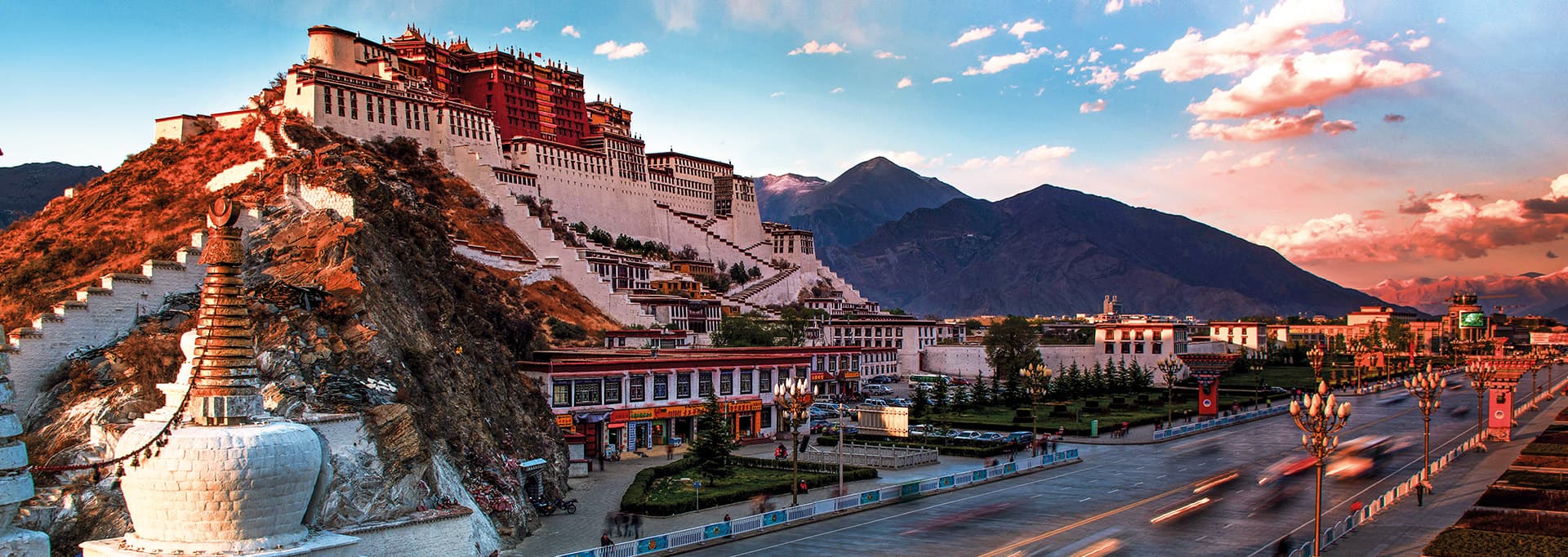
The Potala, one of the most famous architectural works of the world, sits on top of the Red Hill in Lhasa. In the 7th century, after the Tibetan King Songtsen Gampo's married Princess Wencheng of the Tang Court, the Palace was built to provide the Tibetan court with a place of worship and meditation. In the mid-17th century, it was re-built by the 5th Dalai Lama to its present size, and became the Winter Palace of the Dalai Lamas. The construction took fifty years from beginning to completion. The Potala is divided into two sections, namely, the Red Palace and White Palace. The total height of the Potala is 117 meters spanning thirteen storeys. The length of the Palace from east to west is 400 meters and the breadth from south to north is 350 meters. The building was constructed of stone and timber with golden roofs. It is a majestic architectural masterpiece
High Altitude Sickness
Altitude sickness becomes a major risk above 3000 m in Tibet. It's very important to acclimatize slowly while trekking in Tibet, and most guides will ensure you sleep at a lower altitude to the maximum reached on the same day. It is also important not to get dehydrated, and to pace you. Go slow from day one of the trek, stick with the group and if you’re feeling unwell, take a rest. The rule for trekkers is 'climb high, sleep low'. So ascend to a new height during the day, but descend a little to sleep at night. The zigzag route allows your body to adjust to the low oxygen pressure. Don't take short cuts – if a guide suggests he can do an 8-day trek in five, it's a sure sign he doesn't follow the 'sleep low' rule. Going straight up all day everyday is a recipe for disaster. If you don't have the time for a lengthy trek, make time, or pick a different trek.
Stages of altitude sickness
Acute Mountain Sickness/AMS
This is the broad term for altitude sickness. Symptoms of AMS include a headache (often throbbing, worse when bending over), nausea/vomiting, fatigue and a general feeling of a hangover.
High Altitude Cerebral Edema (HACE)
Is a life-threatening emergency that has symptoms of ataxia (walking in a stumbling manner) and changes in mental status such as confusion or lethargy. This is literally swelling of the brain. Symptoms of AMS are also usually present.
High Altitude Pulmonary Edema (HAPE)
Is a life-threatening emergency with symptoms of a cough (wet or dry), difficulty breathing with mild exertion and all the symptoms of AMS. Fluid collects in the patient's lungs.
Treatment
The definitive treatment for all altitude sickness is descent. Treatment of high altitude sickness of all kinds’ centers around the prompt recognition of the symptoms and realizing that altitude could be the cause of the illness. First and foremost, upon beginning to feel ill at altitude, do not ascend any higher. Some experts even advise descending 1,600 - 3,200ft (500 - 1,000m) for 24 hours to allow the body to acclimatize more slowly. Medical treatment of more severe forms of altitude sickness such as HACE and HAPE should be given by a person skilled in altitude medicine. A traveler who suspects HACE or HAPE should immediately descend to a lower altitude and seek advanced
medical care. Some tips given below may aid in the treatment, but the descent is the best medicine.
Some tip to ignore High Altitude Sickness in High Elevation in Tibet (above 3,000 m)
Walk up: If you drive or fly to an elevation higher than 3,000 m, stay at your first stop for at least 24 hours before going higher.
Go slow: Once above, don’t increase your altitude more than 300 m - 350 m a day.
Rest: Build a rest day into your schedule for every 900 m - 950 m you climb.
Acclimatization: “Climb high and sleep low”: If you climb more than 300 m in a day, come down to sleep at a lower altitude.
Know your body: Recognize the signs and symptoms of altitude sickness. Move to a lower altitude (or avoid climbing higher) if you notice any symptoms.
Stay hydrated: Drink 5-6 Litters of water per day.
Avoid alcohol & Coffee in high altitude: Alcohol can dehydrate your body. It also has stronger effects at higher elevations, which can impair judgment.
Eat More rice, potato, lentil, and maize (energy giving food): Eat a diet everyday that’s have more than 70% carbohydrates. Need 5,000 to 6000 kcl/per day.
Know the “don’ts”: Avoid tobacco and depressant drugs, such as sleeping pills and tranquilizers.
Avoid meat in high elevation: Meat items needs more time to digest, above 30 hours. So avoid meat item during trek in high altitude.
Recommended clothing and equipment list for the trip:
Sleeping bags (down with inside extra cover), jacket (down) / polar fleece, with rain and water proofed, thermal underwear, wind / rain-proof trousers, woollen and sun hats, scarves (muffler), woollen or cotton socks, gloves, trekking boots, sun/snow glassed, towel, t-shirt/s, sunscreen/sun lotion, flash light with extra bulbs and batteries, sandals, water bottles, day pack (for your day time necessities), kit or duffel bag (to keep your personal belongings) first aid box /personal medicine walking stick. Please do not carry unnecessary items and/or valuables. Be sure you have the needy items!
Warm clothes, water bottle, water purification tabs, sun tan lotion utility knife, dusk musk, medicine for headaches, fever, colds, stomach disorders and diamox (unless you are allergic to sulpha drugs) for altitude sickness, It is also good to carry dry fruit, juice powder, breads, candy, canned or packed food, nuts, pickles and biscuits.
Good Health:
Even though participants do not need to submit any health certificate those with a history of medical problems, particularly cardiac or respiratory, should consult a doctor before deciding to undertake the trip. It is rigorous and challenging trip where all the time spent at high altitudes. At least 2 months regular practice is recommend either 2 hours daily running, swimming, or joining on a health club may help to complete the yatra very successfully.
Health, Fitness & Insurance
Start your physical fitness program several weeks before starting the journey. Walking, hiking and back packing over rugged terrain are the best ways to prepare for a trek any regular regime of strenuous aerobic exercise is also beneficial as also running, swimming and cycling prior to departure.
As some areas in Tibet, especially in the higher regions have a rarified atmosphere and could lead to breathing problems. In addition to the normal medications for traveling recommended by your doctor, you should bring something to prevent symptoms of acute mountain sickness. Altitude Mountain Sickness -is basically lack of oxygen at heights over 2500 mts. The major cause for AMS is the speed with which one makes the ascent. Even when one is acclimatized to a given height one can still get ill when climbing higher. Nausea, breathlessness, head ache and dizziness are common irritability and loss of appetite is common symptoms of AMS. Acclimatization is hampered by rapid ascent where necessary a few days of rest help. Take time to acclimatize, drink lots of water, consumption of light food with high carbohydrate content is also advisable and bring purification tablets.
People suffering from heart, diabetes, asthma, lung and kidney, high blood pressure are known to have trekked successfully in Tibet, but before traveling to Tibet one should consult a physician and medical advice on precautions to be taken in case of problems erupting on the way.
Tibet's high altitude and the atmosphere allow the sun's solar radiation to strike the earth with unusual intensity at all times of year can cause Sun burn - It is easy to get sun burn in Tibet. Sunscreen lotion (U.V.lotion) is a must to avoid sunburn good quality lotion will contain sun protection factor (SPF). To protect your eyes and skin, bring a sunhat (A wide brimmed hat), sunglasses (Preferably without a metal frame), lip balm, zinc-oxide cream to provide 100% block-out.
In the event of an emergency, the hospitals and clinics are primarily located in the large cities. There is no emergency helicopter service in Tibet. If anybody requires evacuation, he or she will take to the nearest road head. A basic first -aid kit is provided in the support truck. However, one should carry one's own personal medication and basic first - aid material as well
Risky and Liability
Travelers, who sign up for Tibet trips, will be exposed to health risk because of the nature of terrain and trail in Tibet. In the event of illness, accident or delays beyond our control Sony Travels, or its agents will not be held responsible or liable for damages. Please keep in mind that you travel at your own risk.
Insurance & Emergency Expenses
We suggest that clients insure themselves against a comprehensive claim policy. Which should also include Helicopter Evacuation if necessary? (Comprehensive Insurance Policy may be taken in Kathmandu. You may ask our Kathmandu representative to assist in this regard). Please note that our Kailash Tour Package does not include any rescue or evacuation expenses in emergencies. Any Emergency arrangement other than regular straight forward tour itinerary service should be borne by the client themselves.
Reservation Terms and Conditions
The following booking conditions apply to all trips operated by Adventure Land Nepal Tours and Travels.
- Visa for Tibet - The clients must get into Katmandu at least two days prior to departure to Tibet tour as visa working days in Chinese embassy are - Every Monday, Wednesday and Friday only between 0900-1100 hrs.
In order to book a particular tour to Tibet we need the following details in advance:
- Full name as it is in the passport
- Passport number
- Date of Birth
- Sex
- Occupation
- Nationality
- Passport expiry date
Health:
Good health and physical fitness is required on all trips. We recommend a physical examination for all trekkers on extended treks.
Insurance:
It is a condition while booking a trek with Adventure Land Nepal Tours and Travels that travelers/trekkers must be protected by insurance that covers cancellation, accidents, health, emergency evacuation, and lost of items, theft of or damage to baggage and personal effects. All costs for emergency evacuation must be paid in cash in Nepal unless an insurance company has agreed to pay the costs on your behalf. It is important that any insurance policy issued to cover emergency evacuation for a trek does not exclude alpinism or mountaineering. Rescue insurance is not available in Nepal.
Payment:
We require US$ 30% deposit per person 30 days before the starting date of the trek. Though we do not require it, we would appreciate payment in full before you arrive in Nepal.
Cancellation:
In the event you cancel the tour and trekking the following charges will be made: More than 30 days in advance*: US$ 40% per person. Less than 30 days in advance*: US$ 60% per person. On or after the starting date*: no refund will be made.
Refunds:
There will be no refunds if a passenger leaves a trip for any reason whatsoever, either voluntarily or involuntarily, after it has begun. We will make no refunds for any meals, accommodation or services not used.
Delays and Itinerary Changes:
The passenger specifically agrees that Sony travels shall not be held responsible for any delays or changes in itineraries caused by an act, omission or other circumstances on the part of domestic airlines or helicopter companies in Nepal; the trekkers/travelers understand that such situations may occur, and that we will not be able to inform them of each possible problem.
Responsibility:
We reserve the right to refuse to continue to carry any passenger(s) causing inconvenience or annoyance to other travelers/trekkers, or creating difficulties that would hamper the smooth running of a trip. We shall not be liable for any loss or damage to baggage or personal possessions, or any consequential losses resulting there from. If a traveler/trekker is injured or becomes ill, all evacuation and hospital expenses, doctors' fees and repatriation costs are the traveler/trekker's responsibility, and Sony travels shall not be liable for any refund of the tour fare. It is the traveler/trekker's responsibility to have valid passports and all visas and equipment that may be required on the selected tour. We do not accept responsibility for failure to obtain these visas for any reason, and do not accept responsibility for any passports or documents left with us for this purpose.
Price Changes:
The prices quoted by Adventure Land Nepal Tours and Travels are based on airfares, exchange rates and costs in effect on the date shown. We reserve the right to alter our prices if these rates change substantially. We may also apply surcharges in the event of significant changes in airfare, government regulations and taxes. We cannot make refunds to traveler/trekker who is adversely affected by changes in exchange rates.
Assumption of Risk:
The traveler/trekker understands that during the course of the trip, certain risks and dangers may occur, including, but not limited to, the hazards of traveling in mountainous terrain, accident or illness in remote places without medical facilities, and the forces of nature. The traveler/trekker agrees to assume all risks associated with the journey, and agrees that no liability will be attached to the company or its outfitters, employees or agents, or to any member of the tour group in respect to death, personal injury, illness or delay of traveler/trekker, or for any loss or damage to the property of the traveler/trekker during the course of the trip, howsoever caused.
Reservation Idea:
Deposit of full payment should be made to reserve the arrangements as per the regulation of Tibet Tourism Bureau at least 30 days before departure. Prices are quoted in United States Dollars. All payments must be made in US Dollar.
Method of Payment
All amount of payment should be made by telex transfer to Himalayan Bank Limited, Tri Devi Marg, Kathmandu, Nepal, and we are to be advised of remittance by fax. Contact us for paying by Credit Card. Bank Draft and personal cheques will not be accepted.
Documentation:
You will be required to advise us the arrangement required of clients with details such as Full Name (exactly appears in the respective Passport), Date of Birth , Passport No, Date of issue, Date of Expiry, Sex, Nationality, Occupation and arrival/ departure flight/date information. Clients traveling to Tibet should arrive in Kathmandu at least 2 days prior to departure to Tibet to process the Tibet Visa with Chinese Embassy in Kathmandu as Chinese Embassy is open for visa application from 10 AM to 11 Am every Monday, Wednesday and Friday. If one wish to get the visa in one working day is also possible by paying surcharge of emergency visa fee. We advise to obtain double entry Nepal visa from Nepalese Embassy/Consulate abroad or obtain the same arrival at Kathmandu Airport.
Baggage Allowance
Free baggage allowance is 20 Kg per person.
Cancellation
Any cancellation made up to 10 days prior client's arrival in Kathmandu, 50% of total payment will be charged and if made less than 10 days before tour date, no refund will be made as per the policy of Tibet Tourism Bureau. Refunds No partial refunds will be given for unused rooms, meals, sightseeing trips or trekking arrangements for any reason whatsoever.
Written by Himanshu Travels
Himanshu Tours & Travels team